Difference Between Medical Equipment and Medical Devices

Medical Equipment vs Medical Devices
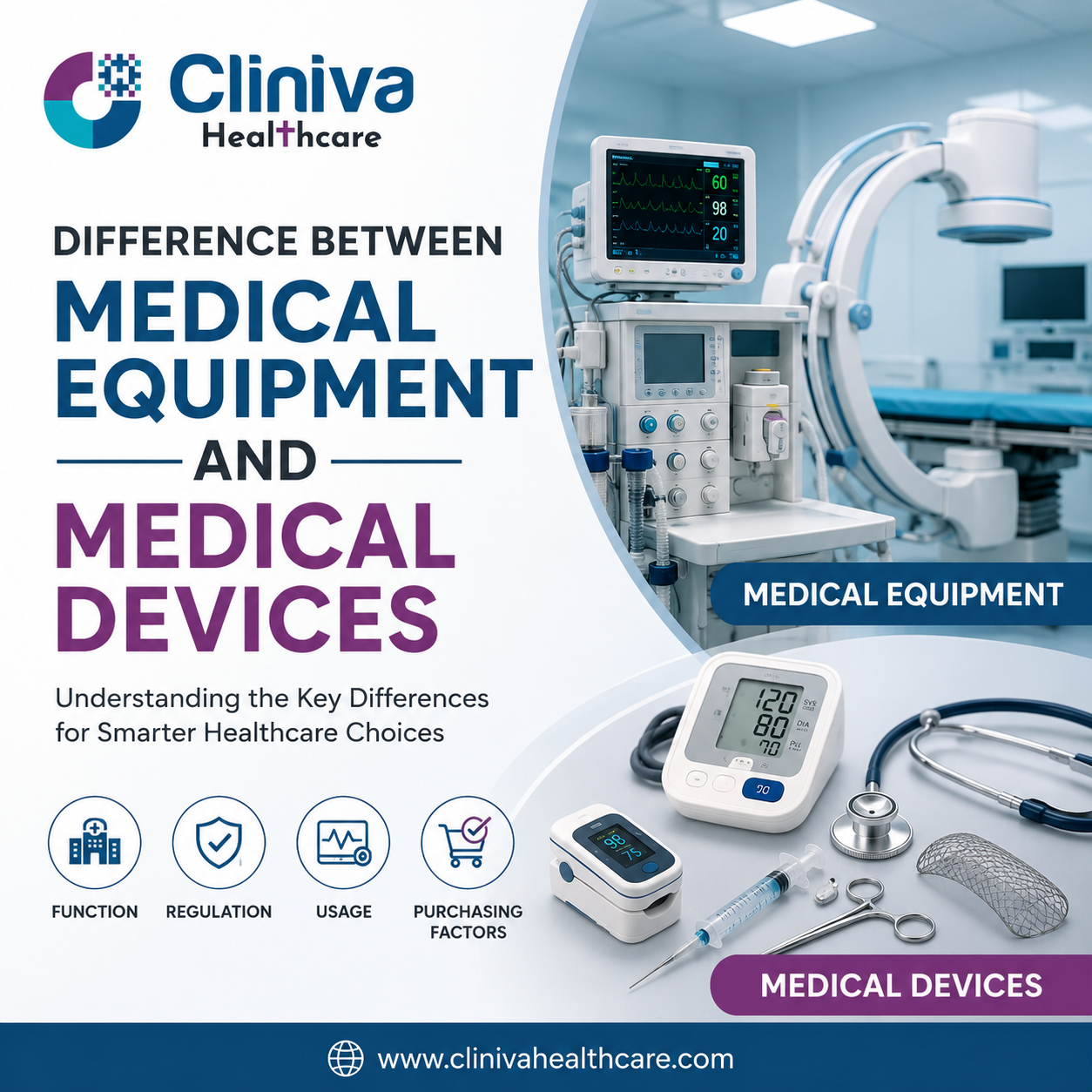
In the healthcare industry, we generally use both the terms medical equipment and medical devices interchangeably. But both have different meanings and applications in healthcare industry. It is essential to understand difference between medical equipment and medical devices, especially for healthcare professionals, hospitals and clinics to take reliable purchase decisions. No matter whether you buy Hospital Medical Equipment, order Surgical Medical Devices, or deal with a reputable Medical Equipment Manufacturer and Medical Device Manufacturer, the knowledge of these definitions will come in handy. Medical equipment refers to machines used in the treatment, monitoring and diagnosis while medical devices includes a range of instruments used to support patient care. We are going to explain in brief about the difference between medical equipment and medical devices in this blog.
What Are Medical Equipment and Medical Devices?
Medical equipment and medical devices are both created with healthcare in mind. However, these terms mean something different in respect to the application.
Medical Equipment usually means some large apparatuses and equipment for treatment, diagnosis, monitoring, etc., while Medical Devices can be anything from surgical instruments to disposables and implants.
The point is, that the terms have a lot in common and many healthcare products can be attributed to both at once. However, it is good to understand their difference and know which one you are buying.
What Is Medical Equipment?
Medical equipment can be defined as machinery, systems, or apparatus used in hospitals and healthcare institutions for diagnosing, monitoring, and treatment purposes.
Characteristics of medical equipment include the fact that it uses advanced technology, has a higher degree of durability, requires frequent maintenance, and calibration is done periodically.
Medical equipment is extensively used in hospitals, diagnostic centers, operating theaters, intensive care unit, outpatient facilities, and specialized healthcare facilities. A good Medical Equipment Manufacturer or Hospital Equipment Manufacturer will ensure that these products meet international standards for quality and safety.
What Is a Medical Device?
The definition of medical device states that it is an instrument, apparatus, implant, reagent, software, or other article used for diagnosing, preventing, monitoring, treating, or alleviating a disease. Unlike large medical equipment, the devices can be simple surgical forceps or complex implantable devices.
There are many types of Medical Devices used in various disciplines of medicine like surgery, cardiology, urology, orthopedics, and pathology. Many of the Surgical Medical Devices are manufactured with precision to assist in minimally invasive and open surgeries.
Examples of Medical Equipment
The example of medical equipment include a type of instruments and machines for the treatment, monitor and support of a patients. Medical equipment are generally used in the clinics, labs and hospitals. Some of the most common example of medical equipment are given below:
Endoscopy Systems
Imaging equipment used to view organs inside the body.
Electrosurgical Units
Electrosurgical equipment include high frequency electrical units to perform cutting and control bleeding during surgeries.
Hospital Furniture
Beds, examination tables, stretchers, and patient chairs for clinical setting.
Diagnostic Imaging Equipment
X-ray, ultrasound, CT scan, MRI equipment used for diagnosing diseases.
Operation Theatre Equipment
OT products includes wide range of equipment such as operating tables, surgical lighting, camera system anesthesia stations, and ceiling pendants for surgeries.
Patient Monitoring System
Electrical monitoring system to monitor the vitals like ECG, blood pressure, oxygen saturation, and body temperature.
Examples of Medical Devices
The products used for the treatment, prevention and monitoring of medical conditions without much depending on the pharma or chemical action is known as Medical Device. These equipment play important role from patient care to long term treatment support. Some of the common examples of medical devices are given below:
Laparoscopic Instruments
Laparoscopic instruments includes a highly specialized surgical instruments used for minimally invasive operations through small cuts.
Urology Instruments
Highly specialized instruments that are used to diagnose and treat the diseases related to urinary tracts and kidneys are known as Urology instruments.
Catheters
A flexible tube that is inserted into the body for purposes of drainage, injection of fluids or diagnostic tests.
Surgical Forceps
Hand-held surgical instruments that are used to hold, grasp, or manipulate tissues for medical purposes.
Biopsy Instruments
Medical instruments that are used to safely take out tissue samples for pathological evaluation.
Disposable Medical Products
One-time-use products such as syringes, gloves, surgical drapes, infusion sets and specimen collectors that ensure the infection control are known as the hospital disposable products.
Why Understanding the Difference Matters?
The knowledge of the difference between Medical Equipment and Medical Devices can be useful for hospitals.
Hospital procurement departments will be able to determine which suppliers need to be approached to buy either a Medical Equipment, Medical Device or specialized Medical Instruments.
The budget will become more realistic due to increased capital investment, costs of installation, maintenance agreements, and operator training. The medical devices might require recurrent purchases in case of the disposable ones.
Maintenance needs may differ substantially. Most of Diagnostic Medical Equipment requires regular maintenance, calibration and preventive maintenance while most of the medical devices need to be sterilized, checked or replaced after using them.
It is particularly important to select the right device since it contributes to patients’ safety, helps to make procedures efficient and improves the outcomes of the treatment.
Factors to Consider Before Purchasing
Selecting the right medical equipment or medical device need careful evaluation to ensure safety, performance, and long-term benefit. Factors such as quality standards, regulatory compliance, and ease of operation, maintenance requirements, warranty, and after-sales support should be considered before buying. Investing in reliable products from a trusted medical equipment-device manufacturer or supplier helps healthcare facilities deliver efficient patient care.
Quality Management Standards
Always choose the product which was produced according to international quality management standards.
Certificates
Check the certificates such as ISO 13485, CE mark, CDSCO, FDA clearance depending on the target country and product.
Clinical application
Select the product which is designed for the specific medical specialty, procedure and patient.
Durability
It is necessary to assess the lifetime of the product, the quality of material used, maintenance needs and frequency of using it.
After-sales support
Regular maintenance, technical help, spare parts availability is needed.
Manufacturer’s experience
The company should have experience in producing medical devices, medical equipment and hospital equipment.
Frequently Asked Questions
Are all medical devices regarded as medical equipment?
No. The medical equipment is one of the classes of the medical devices, whereas there are some other types of medical devices like catheters, implants, and disposable products which do not come under the category of medical equipment.
What is the difference between surgical instruments and medical equipment?
The surgical instrument is any hand-held or specialized tool which is used during surgery, while the medical equipment means the large machine or system used during diagnostic tests, observation, and treatment.
Are the disposable products regarded as medical devices?
Yes. Some disposable products including syringes, IV sets, gloves, surgical drapes, and catheters are considered to be medical devices since they have specific medical uses.
Which products are subject to calibration?
The Large Diagnostic Medical Equipment like patient monitor, imaging system, ventilator, and electrosurgical unit normally needs calibration and maintenance.
Which Certifications Should Healthcare Buyers Consider?
Some certifications to be considered by the healthcare buyers include ISO 13485, CE Mark, CDSCO Registration, FDA clearance, etc.
Conclusion
While there are many similarities between Medical Equipment and Medical Devices, they have separate roles in the current state of affairs in healthcare industry. Usually, the medical equipment refers to larger systems which can be used for diagnostics, monitoring and treatment, whereas the medical devices involve much more variety of instruments, implants, disposables, and surgical tools.