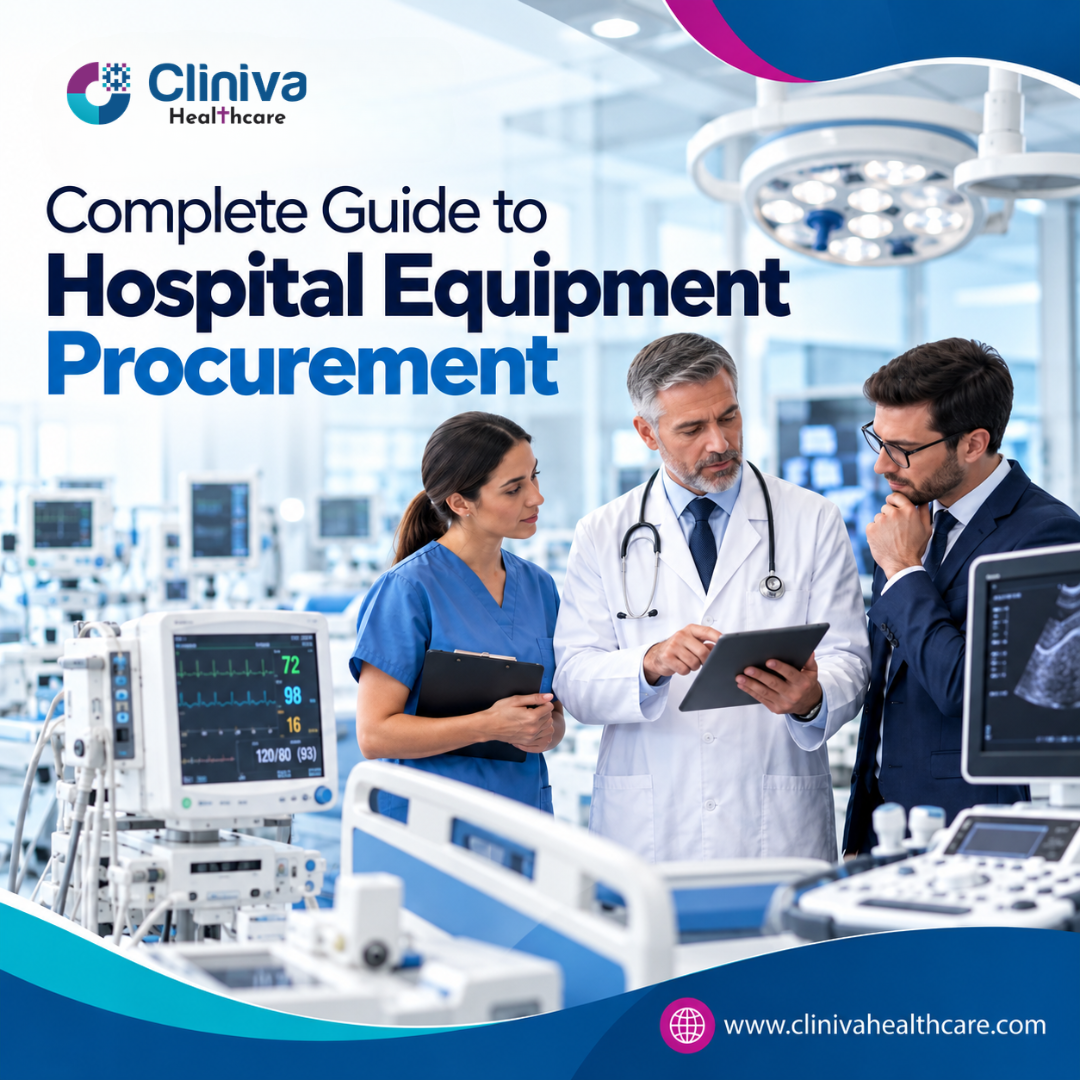
Complete Guide to Hospital Equipment Procurement

Hospital Equipment Purchasing
Comparing product prices is only one aspect of hospital equipment purchasing. In order to buy the right hospital equipment, the hospital should take into account factors like specifications, clinical requirements, quality, certification, capabilities of the hospital equipment manufacturer, logistics, installation, training, and post-sale services. It can be done through procurement, which will allow healthcare institutions to deal with finances, operations, and maintenance needs while selecting suitable equipment.
What is Hospital Equipment Procurement?
The process of finding, evaluating, purchasing, and managing medical and healthcare equipment needed for clinical and operational tasks is known as hospital equipment procurement. It might include everything from specialized instruments used in specific fields to surgical equipment and diagnostic devices.
The following steps usually take place in a systematic medical equipment purchase process:
- Identification of requirements: On the basis of the departments in the hospitals, patient services, clinical process, and the amount of work that is anticipated, identify the equipment needed.
- Product investigation: Investigate the equipment that is available in addition to their capabilities, configurations, technical specifications, and application.
- Specification: Prior to obtaining quotations, identify the requirements technically and clinically.
- Evaluation of supplier: Assess the knowledge of prospective suppliers, their product line, services, and supply capacity.
- Comparison of quotations: Assess costs associated with specifications, installation, accessories, warranty, and other related costs.
- Quality/compliance review: Evaluate relevant laws and regulations.
- Purchase: After all necessary internal approvals, finalise commercial terms and initiate purchase.
- Delivery: Coordinate transportation, delivery schedules and receipt of the equipment.
- Installation: Confirm that equipment is installed, configured and tested according to applicable requirements.
- Training: Ensure relevant clinical, technical and support personnel understand proper operation and basic care.
- Maintenance: Establish warranty, servicing, and preventive maintenance and spare-parts arrangements.
Instead of viewing purchases as one-time transactions, this method assists hospitals in taking into account the entire procurement lifecycle.
Hospital Equipment Procurement Process: Step-by-Step
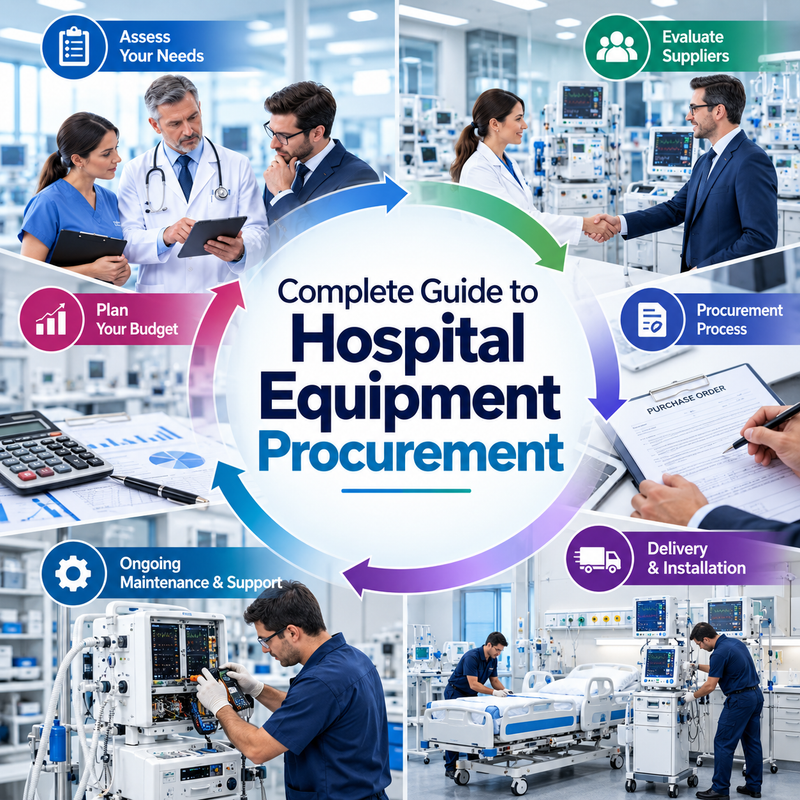
A structured procurement process helps hospitals select equipment that meets clinical needs, quality requirements and budget considerations. From identifying requirements to after-sales support, each step should be evaluated carefully before placing an order.
1. Identify Hospital Equipment Requirements
Start by understanding exactly what the hospital needs. Consider the department where the equipment will be used, the clinical procedures performed, expected patient volume and available infrastructure. Staff requirements, space, utilities and ease of use should also be considered before selecting a product.
2. Define Technical Specifications
Create clear technical specifications before requesting quotations. Specifications should describe the required features, performance, dimensions, accessories and other essential requirements. A well-defined specification makes it easier to compare different products on the same basis.
3. Research Suitable Equipment and Suppliers
Research suitable equipment categories, manufacturers and suppliers based on the hospital’s requirements. Compare product specifications, quality, certifications, supplier experience, service capabilities and availability rather than relying only on the initial purchase price.
4. Request and Compare Quotations
Request detailed quotations from suitable hospital equipment suppliers and compare the complete cost of procurement. Consider the product price, taxes, delivery, installation, warranty, accessories, consumables and training. Looking at the total cost helps avoid unexpected expenses after purchase.
5. Evaluate Supplier Credentials
Review the supplier’s manufacturing capability, certifications, quality systems, product portfolio and previous experience. For larger projects, also consider export or supply capabilities and the availability of technical and service support. A supplier with established manufacturing and distribution capabilities may be better positioned to handle ongoing requirements.
6. Evaluate Product Quality and Compliance
Check the product’s applicable certifications, standards, test reports and technical documentation before purchasing. The required documentation may vary depending on the equipment category and intended use. Verify that the supplied product meets the specifications and regulatory requirements applicable to the project.
7. Finalise the Purchase
Once the product and supplier have been selected, clearly document the purchase order and commercial terms. Confirm the agreed price, delivery schedule, warranty, payment terms and installation responsibilities before placing the order.
8. Installation, Training and Commissioning
After delivery, ensure that the medical equipment is installed correctly and checked before use. Staff should receive appropriate training on operation, cleaning, handling and basic safety procedures. Commissioning helps confirm that the equipment is ready for its intended application.
9. After-Sales Service and Maintenance
Procurement does not end when the equipment is delivered. Ask about preventive maintenance, repairs, spare parts, technical support and warranty service. Reliable after-sales support can help maintain equipment performance and reduce avoidable downtime during hospital operations.
Major Categories of Hospital Equipment
Hospitals use a wide range of equipment across clinical, surgical, diagnostic and patient-care departments. Understanding the main categories makes it easier for procurement teams to identify their requirements and compare suitable products and suppliers.
Operating Theatre Equipment
Operating theatre equipment supports surgical procedures and helps maintain an organised and functional operating environment. Depending on the hospital’s requirements, this can include surgical tables, lights, equipment trolleys and other OT accessories.
Surgical Instruments
Surgical instruments are used by medical professionals for procedures such as cutting, grasping, dissecting, suturing and tissue manipulation. Hospitals should select instruments based on the intended procedure, material quality, design and sterilisation requirements.
Laparoscopic Equipment
Laparoscopic equipment is used for minimally invasive surgical procedures. The category can include laparoscopic instruments, scopes, graspers, scissors, trocars and related accessories required for different procedures.
Urology Equipment
Urology equipment supports the diagnosis and treatment of conditions involving the urinary system and related organs. Hospitals may require specialised instruments for procedures such as endoscopy, stone management and other urological interventions.
Gynecology Equipment
Gynecology equipment is designed for procedures involving women’s reproductive health. Depending on the department, this may include examination instruments, surgical instruments, endoscopic equipment and other specialised devices.
Orthopedic Equipment
Orthopedic equipment supports procedures involving bones, joints and the musculoskeletal system. Hospitals may require specialised surgical instruments and equipment for trauma, fracture, joint and other orthopedic procedures.
Diagnostic Equipment
Diagnostic equipment helps healthcare professionals examine patients and support the diagnosis of medical conditions. The equipment required will depend on the hospital’s departments, diagnostic services and clinical workload.
Patient Care Equipment
Patient care equipment supports routine treatment, monitoring, mobility and day-to-day care. Procurement teams should consider factors such as patient safety, usability, durability and compatibility with the hospital environment.
Hospital Disposables
Hospital disposables are generally intended for single use or limited use, depending on the product and applicable instructions. Gloves, surgical consumables, procedure-related products and other disposable supplies help support routine clinical and surgical activities.
Sterilization and Infection-Control Equipment
Sterilization and infection-control equipment helps hospitals maintain hygienic clinical environments and process reusable medical instruments safely. Procurement should consider the required sterilisation method, equipment capacity, workflow and applicable standards.
Key Factors to Consider Before Purchasing Hospital Equipment
Choosing hospital equipment involves more than comparing product prices. Procurement teams should consider clinical needs, technical specifications, quality, compliance, usability and long-term service requirements before making a purchase decision.
Clinical Requirements
Start with the intended clinical application. Consider the department, procedures performed, patient volume and specific requirements of doctors, nurses and other healthcare professionals who will use the equipment.
Equipment Specifications
Review the technical specifications carefully before comparing products. Important factors may include dimensions, capacity, materials, performance, operating features, accessories and other requirements specific to the intended application.
Quality and Durability
Hospital equipment is often used frequently and needs to perform consistently. Consider the materials, manufacturing quality, expected service life and quality-control processes when evaluating different products.
Certifications and Compliance
Check the certifications, standards and regulatory documentation applicable to the specific equipment. Requirements can vary by product category, intended use and market, so procurement teams should verify the documentation relevant to their purchase.
Ease of Use
Equipment should be practical for the staff who will operate it. An intuitive design, clear controls and straightforward operating procedures can help reduce unnecessary complexity and support efficient clinical workflows.
Compatibility With Existing Equipment
Before purchasing, check whether the new equipment is compatible with existing systems, instruments, accessories, connections and hospital infrastructure. Compatibility issues can create additional costs or operational difficulties after installation.
Installation Requirements
Confirm the space, electrical supply, plumbing, ventilation, connectivity or other infrastructure requirements before ordering equipment. Understanding these requirements in advance can help prevent delays during installation.
Training Requirements
Find out what level of training staff will need to operate the equipment safely and correctly. Ask the supplier whether product demonstrations, user training or technical guidance are included with the purchase.
Warranty and Service Support
Review the warranty terms and understand what is covered, for how long and under what conditions. Also check the supplier’s availability for repairs, technical assistance and routine service after installation.
Availability of Spare Parts
Ask about the availability and expected lead time of replacement parts. Reliable access to genuine spare parts can help reduce equipment downtime and support long-term maintenance.
Total Cost of Ownership
The purchase price is only one part of the overall cost. Consider installation, training, consumables, maintenance, spare parts, repairs and other ongoing expenses when evaluating the total cost of ownership.
How to Plan a Hospital Equipment Procurement Budget?
Both the initial investment and potential operating costs should be taken into consideration when creating a budget for medical equipment purchases. It may be challenging to determine the true cost of ownership based solely on the advertised purchase price.
Initial Purchase Cost
The beginning point is usually the initial purchase price. Hospitals may, however, also need to set aside money for relevant parts, attachments, accessories, and supporting infrastructure. Before installation, certain equipment can need particular plumbing, electrical, ventilation, or room arrangements.
Installation
When equipment needs to be professionally set up, tested, commissioned, or integrated with existing systems, installation expenses should be taken into account. Whether these services are included in the supplier’s quote should be made clear in the procurement plan.
Accessories
For certain medical equipment to function properly, extra accessories or appropriate parts are needed. Before making a purchase, hospitals should determine these requirements and make sure the stated price includes them. This may assist avoid unforeseen costs following delivery.
Training
To ensure that medical professionals and other registered users understand how to properly operate the device, staff training could be necessary. When new employees join, procurement teams should verify if the initial training is covered and assess whether more sessions could be needed.
Maintenance
Over the course of its intended service life, equipment can continue to work and provide consistent performance with regular maintenance. When creating the procurement budget, hospitals should take preventative maintenance schedules, service needs, and technical support availability into account.
Spare Parts
Throughout its operational lifespan, some equipment may need replacement parts. The cost, availability, and anticipated frequency of spare part replacement should all be taken into account by hospitals. Reducing possible delays when servicing equipment can also be achieved by having easy access to appropriate components.
Consumables
For regular operations or treatments, certain medical equipment needs consumables. These could be disposable parts, procedure-specific items, or other things that need to be changed frequently. Along with the initial equipment cost, their availability and ongoing cost should be taken into account.
Warranty
Warranty coverage can influence the overall cost of owning medical equipment. Hospitals should review the warranty period, components covered, exclusions, service conditions and the process for reporting faults. Any additional warranty or service agreements should also be included in the budget where applicable.
Expected Service Life
The expected service life shows how long equipment might be usable under particular operating circumstances and maintenance procedures. The hospitals would be able to plan for replacement schedules and future capital expenditure needs if this was taken into consideration.
How to Choose the Right Hospital Equipment Supplier?
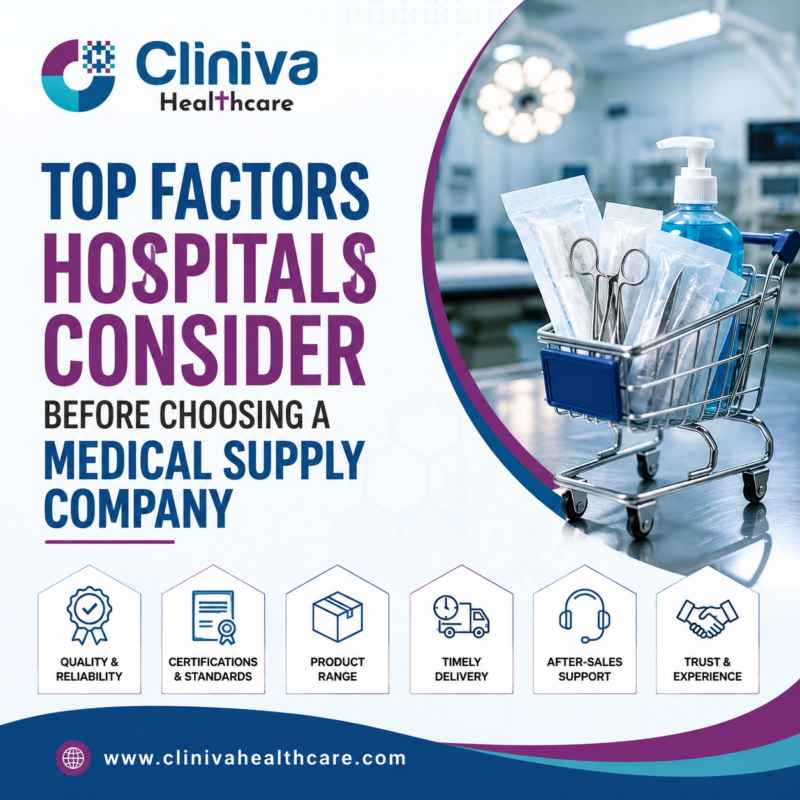
The right hospital equipment supplier should be evaluated on more than product price. Procurement teams should consider the supplier’s experience, manufacturing capabilities, product quality, delivery capacity and ability to provide technical and after-sales support throughout the equipment’s service life.
Check Manufacturer or Supplier Experience
Look at how long the manufacturer or supplier has been operating and the types of healthcare projects it has supported. Experience with similar hospitals, departments or equipment categories can help procurement teams assess whether the supplier understands their requirements.
Review Product Portfolio
Review the supplier’s product range to determine whether it offers the equipment required by your hospital. A broad and relevant portfolio can also make it easier to source multiple products from the same supplier when appropriate.
Verify Quality Certifications
Check the certifications and quality documentation applicable to the specific products being considered. Always verify that certificates are current and relevant to the equipment, intended use and market.
Evaluate Manufacturing Capabilities
If purchasing directly from a manufacturer, review its production facilities, quality-control processes, testing capabilities and manufacturing capacity. This can provide useful information about how products are produced and inspected.
Check Delivery and Supply Capacity
Confirm whether the supplier can meet the required quantities and delivery schedule. For larger hospital projects, consider production capacity, inventory, logistics and the supplier’s ability to provide consistent supply when additional equipment is needed.
Assess Technical Support
Ask what technical support is available before and after installation. Product demonstrations, installation assistance, troubleshooting and technical guidance can be important for equipment that requires specialised operation or maintenance.
Review Warranty and After-Sales Service
Understand the warranty terms, service coverage and response process before finalising the purchase. Also ask about preventive maintenance, repairs and access to service personnel after the warranty period.
Consider Customisation Requirements
Some hospitals may require specific configurations, dimensions, accessories or workflow-related modifications. If customisation is needed, confirm whether the supplier can accommodate the requirement and clearly document the agreed specifications before placing the order.
Why Quality and Compliance Matter in Hospital Equipment Procurement?
Quality and compliance play a very important role in the selection of equipment in hospitals because medical devices affect patient care and users’ safety. It is necessary to verify whether the medical devices comply with regulations. The quality management systems of a supplier can reveal information about the production and quality-control procedures. The legitimacy and applicability of product certifications and testing records should be examined.
Maintenance and service management are supported by traceability records, which include model and serial information. Operation, cleaning, maintenance, and safety precautions must all be adequately covered in user manuals. Prior to purchase of any equipment, hospitals must review their safety policies, potential risks, and applicable standards.
Equipment Procurement by Hospital Department
Some of the equipment procurement by hospital department are mentioned below:-
Operating Theatre
Operating tables, operating lights, anesthesia equipment, patient monitoring devices, electro surgery units, and sterilizers are all needed in operating theatres. All of these issues must be considered when buying.
Laparoscopy
The laparoscope, camera, source of illumination, insufflator, monitors, and other equipment are all required for the laparoscopy department. It is essential that hospitals assess the availability of spare parts, compatibility, durability, and picture quality.
Urology
Cystoscopes, ultrasound systems, lithotripsy devices, resectoscopes, and specialized instruments are examples of urology equipment. Procedures, workload, sterilization, and maintenance needs should all be taken into consideration.
Gynecology
Ultrasound devices, examination tables, colposcopes, fetal monitors, and surgical instruments may be necessary for gynecology departments. Safety, cleanliness, usefulness, and clinical needs should be given first priority in procurement.
Orthopedics
The following are some of the pieces of equipment that an orthopedics department may need, including imaging systems, surgical instruments, power tools, traction devices, and implants.
Why Choose Cliniva Healthcare for Hospital Equipment?
Selecting a hospital equipment supplier requires consideration of manufacturing experience, product range, quality processes and supply capabilities. Cliniva Healthcare has been operating since 2014 and has developed its manufacturing and export activities across multiple healthcare product categories.
Medical Equipment Manufacturing Experience Since 2014
Cliniva Healthcare was established in 2014 and has experience in manufacturing and exporting medical instruments and healthcare products. The company has developed its portfolio across different clinical and hospital requirements.
Manufacturing Facility in Ahmedabad
Cliniva operates a manufacturing and infrastructure facility in Ahmedabad, Gujarat. The company states that its manufacturing setup supports product development, production and quality control for its healthcare product range.
Broad Healthcare Product Portfolio
Cliniva’s portfolio covers several healthcare categories, including medical and surgical instruments, laparoscopic products, urology, gynecology, orthopaedic products, hospital disposables and OT products. This range allows hospitals and healthcare organisations to evaluate products across different departments.
Medical and Surgical Equipment
Cliniva provides medical and surgical equipment for hospitals and healthcare facilities, including surgical instruments and other equipment used in clinical and operating-room applications.
Laparoscopy and Urology Products
The company’s product portfolio includes dedicated laparoscopy and urology divisions. Its laparoscopy range includes instruments and equipment used for minimally invasive procedures, while its urology portfolio includes products such as endoscopy, cystoscopy, ureteroscopy and related urological equipment.
Gynecology and Orthopaedic Products
Cliniva also offers products for gynecology and orthopaedic applications. These categories form part of its broader medical equipment and instrument portfolio for healthcare facilities.
Hospital Disposables and OT Products
The company supplies hospital disposables for areas including surgical, gynecology, urology and other healthcare applications. It also has an OT product category covering equipment and products used in operating theatre environments.
Global Supply Capabilities
Cliniva states that it supplies healthcare products to customers in international markets. Its exports page lists markets across regions including Europe, Asia, Africa, the Middle East and the Americas. This gives international buyers an option to work with a supplier experienced in export-oriented healthcare product supply.
Frequently Asked Questions About Hospital Equipment Procurement
Q1. What is hospital equipment procurement?
Hospital equipment procurement is the process involved in identification, evaluation, acquisition, installation, and maintenance of medical equipment needed for providing health care services.
Q2. What factors should be considered when buying medical equipment for hospitals?
Some factors that need to be taken into consideration include clinical considerations, equipment specification, quality, compatibility, ownership cost, maintenance requirement, user training, and support from suppliers.
Q3. How can I select the appropriate hospital equipment supplier?
Selecting your supplier should depend on criteria such as quality of products, warranties, delivery capacity, certification, technological know-how, serviceability, compliance and price among others.
Q4. Which certifications should I look for when buying hospital equipment?
Confirm that all the required certifications and safety standards have been met for the equipment and the jurisdiction.
Q5. What can hospitals do to lower equipment purchase costs?
Some of the methods include demand planning, bidding process, life cycle costing, bulk buying, standardization, supplier negotiations, preventive maintenance, and warranty evaluation.
Q6. What is total cost of ownership in medical equipment procurement?
Total cost of ownership (TCO) is the overall cost of owning and operating medical equipment throughout its useful life. It can include the purchase price, installation, training, consumables, maintenance, repairs, spare parts and other ongoing expenses. Considering TCO helps hospitals compare equipment based on long-term costs rather than only the initial purchase price.
Q7. Why are installation and training important when purchasing hospital equipment?
Proper installation helps ensure that equipment is set up according to the manufacturer’s requirements and the hospital’s infrastructure. Training helps doctors, nurses, technicians and other users understand correct operation, safety procedures and routine care. Both can help reduce operating errors and support effective use of the equipment.
Q8. How can hospitals evaluate medical equipment quality?
Hospitals can evaluate equipment quality by reviewing applicable certifications, technical specifications, test reports, materials, manufacturing processes and quality-control documentation. They should also assess supplier experience, warranty terms, service support and spare-parts availability. For critical equipment, demonstrations, product evaluations and reference checks can provide additional information before purchase.
Do You Need Hospital Equipment for Your Healthcare Facility?
Are you planning to construct a new hospital, expanding the old one, or upgrading your medical instruments? Let us help you with your requirements. Our team is here to help you make sound decisions regarding the selection of the medical, surgical, or hospital equipment based on your application, requirement, technical specifications, budget constraints, and medical equipment procurement requirements.