Top Factors Hospitals Consider Before Choosing a Medical Supply Company

Medical Supply Company
Choosing the proper Medical Supply Company is extremely important for continuous and smooth treatment, effective operation, and compliance with health care laws. Healthcare facilities rely on reliable suppliers of all necessary items and equipment – surgical equipment, diagnostic tools, hospital disposables, specialized medical devices and many other items. Reliability, quality of products, constant availability and other benefits are provided by the proper Hospital Supply Company.
Since there is a huge number of different suppliers in the market, healthcare organizations have to take into account a few key points when choosing a supplier. The following issues should be taken into consideration by healthcare facilities when choosing a reliable medical supply company.
Why Choosing the Right Medical Supply Company Matters?
Hospitals depend on a consistent supply of medical products to provide safe and efficient patient care. From surgical instruments and medical equipment to hospital disposables and specialized devices, every product needs to meet the required standards for quality, reliability, and performance. This makes choosing the right medical supply company an important decision for hospitals and healthcare facilities.
A reliable supplier does more than simply deliver products. The right medical supply company understands the requirements of healthcare professionals and helps hospitals source products that are suitable for their applications. Consistent product quality can also help reduce the risk of equipment failure, premature replacement, or interruptions during medical procedures.
Another important factor is supply continuity. Hospitals often need regular access to essential medical supplies, and delayed deliveries can affect daily operations. A dependable supplier with proper inventory management, warehousing, packaging, and distribution capabilities can help hospitals maintain a steady supply of required products.
Ultimately, the right medical supply company becomes a long-term supply partner rather than just a product vendor. Hospitals should therefore evaluate quality, certifications, product availability, delivery capabilities, technical support, and overall supplier reliability before making a purchasing decision.
What Does a Medical Supply Company Provide?
A medical supply company provides products and solutions that support the daily operations of hospitals, clinics, surgical centers, and other healthcare facilities. The exact product range can vary from one supplier to another, but established medical suppliers generally offer a combination of medical equipment, surgical instruments, consumables, and specialized healthcare products.
Surgical Instruments
Surgical instruments are among the most important products supplied to hospitals. These may include cutting and dissecting instruments, forceps, clamps, retractors, needle holders, specialized surgical sets, and instruments designed for specific medical procedures. The quality and precision of these instruments are particularly important because they are used directly during surgical procedures. Cliniva Healthcare offers general, orthopedic, gynecology, laparoscopic, urology, and other specialized surgical instruments.
Medical and Hospital Equipment
Medical supply companies may also provide equipment used in operation theatres, diagnostic areas, treatment rooms, and other hospital departments. Depending on the supplier, this can include electrosurgical equipment, endoscopy equipment, OT products, orthopedic equipment, and other specialized medical devices.
Hospital Disposables
Hospitals require a continuous supply of disposable products for routine patient care, procedures, and infection-control practices. Products can include examination gloves, masks, catheter sets and other disposable medical products. Cliniva Healthcare includes hospital disposables as one of its major product categories.
Specialized Medical Products
Some hospitals require products designed for specific departments or procedures. These can include laparoscopic instruments, gynecology instruments, urology equipment, gastroscopy and endoscopy products, orthopedic instruments, and other specialized solutions.
Custom and Application-Specific Solutions
A professional medical supply company may also help healthcare facilities find products according to specific applications or requirements. This can be especially useful when hospitals need particular instrument configurations, product specifications, or customized sets.
Therefore, hospitals should not evaluate a medical supplier only by the number of products it offers. They should also consider product quality, manufacturing capabilities, certifications, availability, delivery support, and the supplier’s ability to understand their specific healthcare requirements.
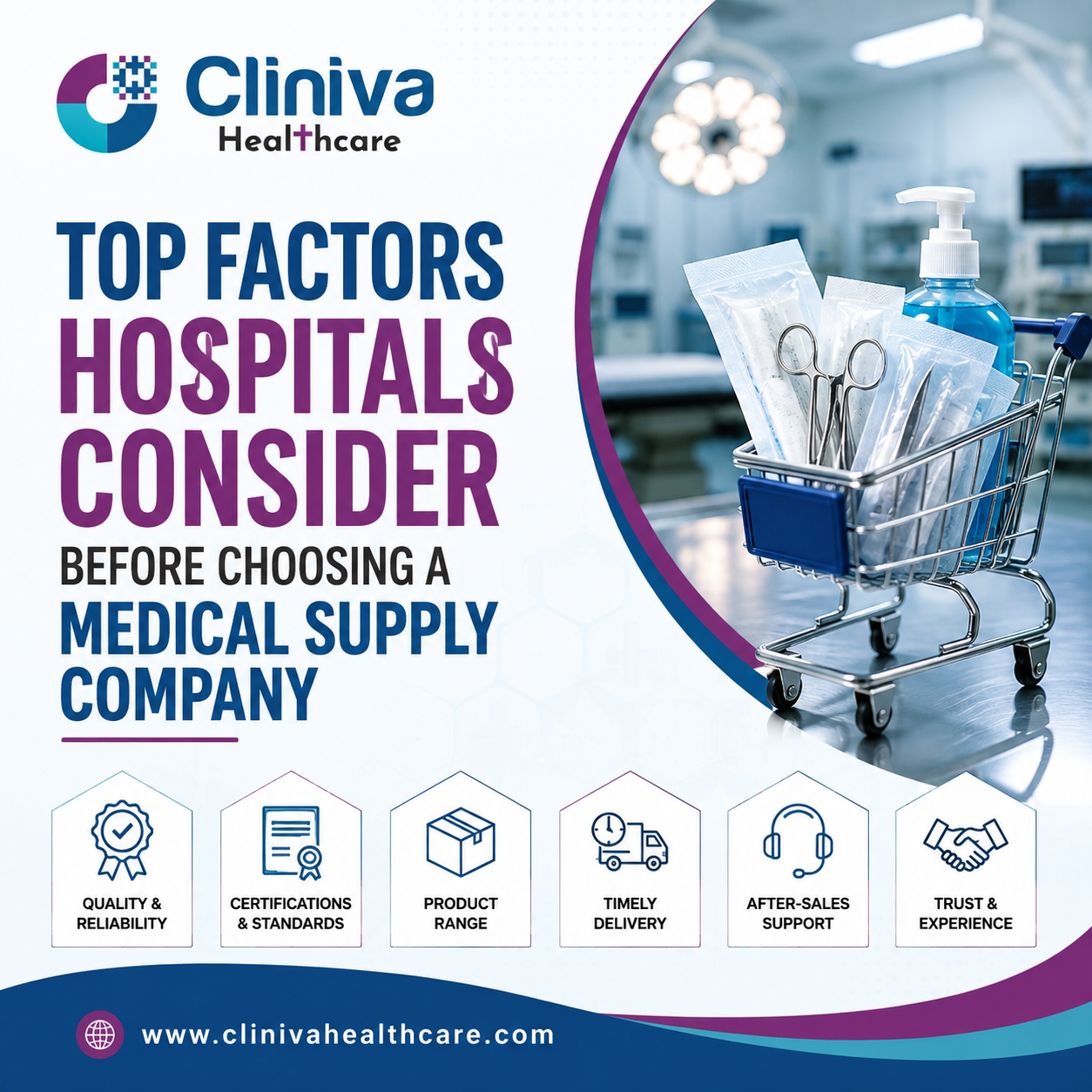
Top Factors Hospitals Consider Before Selecting a Medical Supply Company
Selecting a medical supply company requires more than comparing product prices. Before entering into a long-term partnership, hospital procurement teams typically evaluate several important factors.
1. Product Quality and Reliability
Quality is one of the first factors hospitals should consider. Medical instruments and equipment must perform reliably in demanding healthcare environments. Hospitals should review the materials used, manufacturing processes, quality-control procedures, product specifications, and expected product lifespan before purchasing.
2. Certifications and Quality Standards
Medical products should comply with applicable quality and safety requirements. Hospitals should verify the certifications and quality standards relevant to the products they are purchasing.
3. Product Range
A broad product portfolio can make procurement more convenient. Instead of working with different suppliers for every category, hospitals may prefer a medical supply company capable of providing multiple product lines.
4. Manufacturing and Supply Capacity
Hospitals need suppliers that can handle their required order volumes and maintain consistent product availability. A supplier’s manufacturing infrastructure, warehousing facilities, inventory management, and distribution capabilities can have a direct impact on supply continuity.
5. Delivery and Lead Times
Timely delivery is essential for healthcare facilities. Delays in receiving surgical instruments, equipment, or essential disposables can disrupt procurement schedules and hospital operations. Hospitals should therefore ask about standard lead times, delivery coverage, order processing, and the supplier’s ability to handle urgent or recurring requirements.
6. Technical Knowledge and Product Support
A good medical supplier should understand the products it supplies. Hospitals may need assistance with product specifications, instrument selection, applications, maintenance, or replacement requirements.
7. Customization Options
Different hospitals may have different procedural and departmental requirements. A supplier that can provide customized instrument sets, product configurations, or application-specific solutions can offer greater flexibility.
8. After-Sales Service
The relationship with a medical supply company should not end after delivery. Hospitals should consider the availability of after-sales assistance, product support, replacement options, maintenance guidance, and communication channels.
9. Pricing and Overall Value
Price is an important consideration, but it should not be the only deciding factor. Choosing the cheapest product may result in higher long-term costs if the product has a short lifespan, poor performance, or requires frequent replacement. Hospitals should compare overall value by considering quality, durability, performance, warranty, service, and delivery along with the purchase price.
10. Reputation and Experience
A supplier’s industry experience and reputation can provide useful insights into its reliability. Hospitals can review the company’s experience, product portfolio, manufacturing capabilities, customer relationships, export presence, and track record before making a decision.
11. Ability to Meet Long-Term Requirements
Hospitals usually need an ongoing supply partner rather than a one-time vendor. Before selecting a medical supply company, procurement teams should consider whether the supplier can support future requirements as the hospital expands its departments, adds new procedures, or upgrades its medical equipment.
By evaluating these factors together, hospitals can make a more informed supplier decision and build a dependable procurement relationship.
Why Certifications Matter in Medical Equipment Procurement?
Certificates are some of the most important signs of high quality and reliability in choosing a Medical Equipment Supplier or Medical Equipment Manufacturer. The manufacturer of these products should meet international requirements and standards in terms of production.
ISO Compliance
Companies certified as ISO-compliant have structured and controlled quality management system that provides for consistent manufacturing process. Hospitals prefer to cooperate with ISO-compliant companies since they are less likely to provide defective products.
CE Certification
A device that is CE-certified is one that meets safety and health standards as well as performance requirements. Devices which have received the CE certification are usually prioritized by hospitals who purchase equipment meant for clinical usage.
Quality Assurance
An effective quality assurance process will ensure that all products are inspected strictly before they get delivered to healthcare facilities. Through inspection, right from selection of raw material to final packing, product performance will be assured.
Sterilization Standards
Surgical products and hospital disposables have to be appropriately sterilized. An efficient Medical Device Manufacturer will ensure that all the processes of sterilization and packaging are done in a way to protect their products from any damage.
Manufacturing Consistency
All products that are supplied by the medical supply company should have consistent quality in each order placed. An effective Surgical Instrument Manufacturer ensures manufacturing consistency using standardized production processes and quality inspection machinery.
Why Healthcare Professionals Choose Cliniva Healthcare?
As hospitals evaluate a reliable Healthcare Equipment Supplier based on the factors like the ability to manufacture, product line, quality of services offered and support. This is the main strength Cliniva Healthcare for supplying wide range of medical supply products along with continuous support.
Cliniva Healthcare is a firm that was founded in 2014 to manufacture and export medical equipment and surgical products. The firm manufactures a wide array of products ranging from laparoscopic instruments, urology products, gynaecology products, orthopaedic instruments, operation theatre (OT) products and hospital disposables to enable health institutions to procure several kinds of products from one firm.
With their well-manufactured structures and quality control measures, Cliniva Healthcare is able to manufacture products which conform to health industry needs. They also focuses on fast order processing so that the hospitals do not experience any stock out in their inventories. Apart from manufacturing of products, Cliniva Healthcare has also focused on providing customer support to aid healthcare institutions during procurement.
If hospitals need a reliable Hospital Equipment manufacturer or an experienced Medical supply company, Cliniva Healthcare provides manufacturing services for all these needs through years of experience and wide product portfolio.
Common Mistakes Hospitals Make When Choosing Medical Suppliers
Even seasoned procurement departments may end up making certain decisions that can affect the future operational efficiencies of their firms.
Selection of Low Cost Only
While cost considerations are important, relying on quotations alone to choose medical suppliers might end up compromising on the quality, durability, and reliability of products supplied. Value should always be of greater concern than the cheapest quotations.
No Verification of Certifications
Dealing with medical supply company without proper certification might pose compliance issues as well as concerns about patient safety. Certification should always be verified before a procurement deal is concluded.
Neglecting after Sales Service
Reliable after-sales service including technical support, warranty support, and timely communication is critical for good supplier relations. Effective after-sales service reduces interruptions to your processes.
Small Product Portfolio
Dealing with medical equipment suppliers offering limited number of product categories ends up causing one to work with several different suppliers. Choose a medical supply company with a full product portfolio.
Evaluation of Deliveries Not Done
Late deliveries cause operational problems. The procurement department should evaluate the supplier’s track record of deliveries, manufacturing capabilities, and supply chains.
Frequently Asked Questions
What criteria should hospitals consider while looking for a medical supply company?
There are several criteria such as product quality, certification, manufacturing capability, product range, delivery capability, customer service, and industry experience that hospitals should consider before choosing a Medical Supply Company.
Why are certifications crucial while buying medical equipment?
Certifications such as ISO and CE ensure that the products are made in accordance with international quality standards.
How does a hospital select medical equipment suppliers?
The criteria considered by the hospitals include manufacturing facility, quality control, certifications, product availability, price, customer services, delivery capability, and industry experience.
What products should a medical supply company provide?
The company should provide products like surgical instruments, hospital disposables, laparoscopic instruments, urology products, gynecology instruments, orthopedic products, OT equipment, etc.
Why is it more beneficial to choose a manufacturer than a trader?
It is always advisable to deal directly with a Medical Equipment Manufacturer rather than traders.
How can hospitals achieve consistent quality of products?
It is important for hospitals to choose only certified manufacturers who have documented quality management systems, adhere to high production standards, do routine inspections, and sterilize products in a validated manner.
Conclusion
Choosing a Medical Supply Company is a very important step and has a direct influence on the safety of patients, efficiency of work, and future results in health care. Therefore, hospitals need to give preference to certified medical equipment manufacturers with good quality management systems, diversified product ranges, good delivery record, and good customer service rather than price.
If you are seeking a reliable partner for medical equipment, surgical instruments, hospital disposables and other healthcare products, you are welcome to get in touch with Cliniva Healthcare. Our company has great experience in manufacturing and provides diversified product range that can be beneficial for modern hospitals.