
Disposable vs Reusable Medical Supplies: Which Is Better?

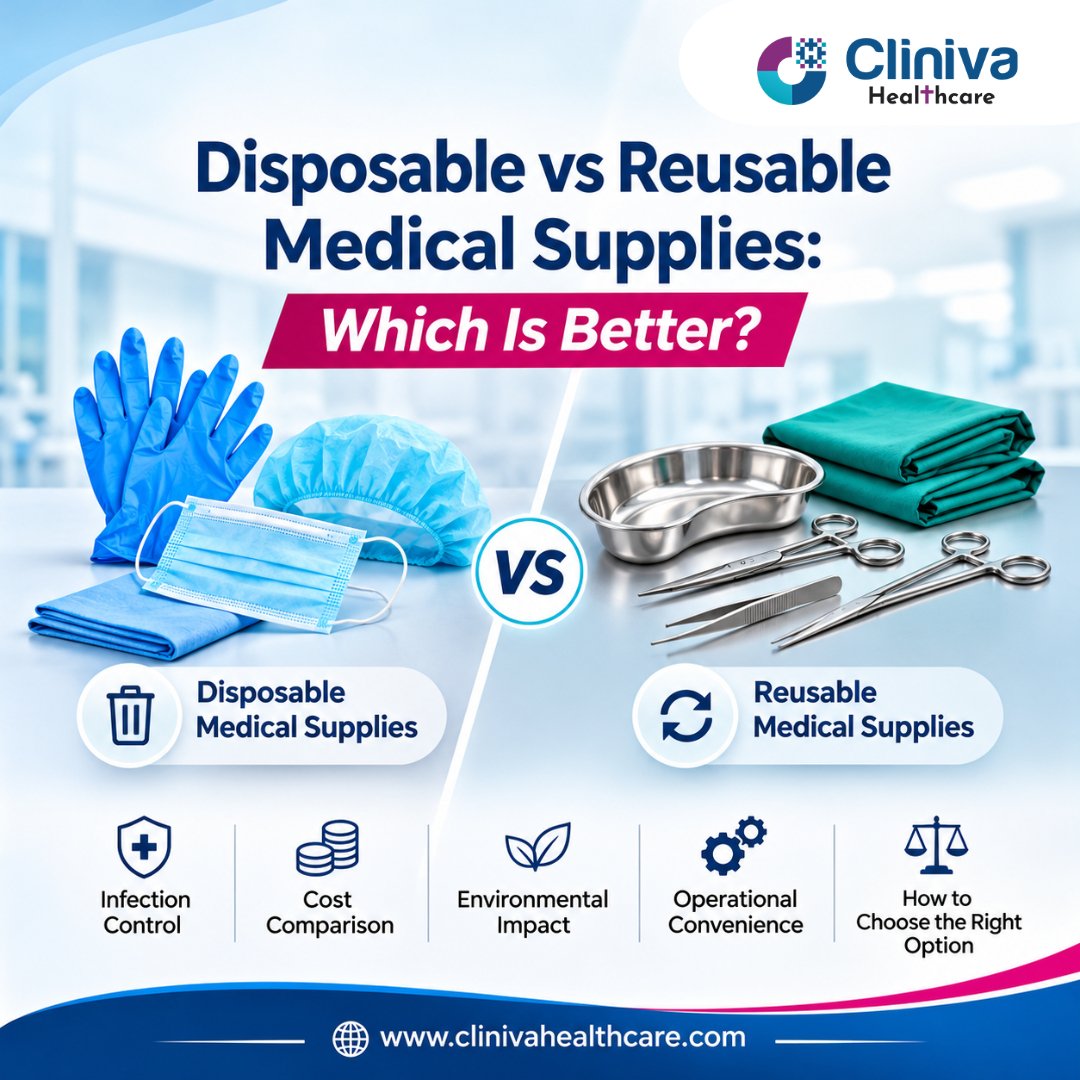
Disposable vs Reusable Medical Supplies
Healthcare facilities rely on a wide range of medical supplies to provide safe, efficient and reliable patient care. From examination gloves and surgical face masks to stainless steel surgical instruments, every product plays an important role in daily medical operations. However, when selecting medical supplies, hospitals and healthcare professionals often face an important question: should they choose disposable or reusable products?
The discussion around disposable vs reusable medical supplies involves more than just the purchase price. Factors such as infection prevention, patient safety, cleaning requirements, sterilisation, operational costs and environmental impact all influence the decision.
Disposable medical products are designed for single use or use as specified by the manufacturer, while reusable medical equipment is designed to undergo appropriate reprocessing before being used again. Both options have an important place in modern healthcare.
Understanding their differences can help hospitals, clinics, diagnostic centres and medical distributors make informed purchasing decisions. In this guide, we will compare disposable and reusable medical supplies, explore their advantages and limitations, and explain how to select the right products for different healthcare applications.
What Are Disposable Medical Supplies?
Disposable medical supplies are products designed for one-time use or a single procedure, depending on the manufacturer’s instructions. After their intended use, these products must be discarded according to applicable medical waste management procedures.
They are widely used in hospitals, clinics, operation theatres, diagnostic centres and other healthcare facilities. Their primary purpose is to support hygienic medical practices while reducing the need for cleaning and reprocessing between uses.
Common examples include examination gloves, surgical face masks, disposable gowns, syringes, needles, medical drapes and certain catheter sets.
Healthcare professionals use disposable medical products for examinations, surgical procedures, patient care and infection prevention activities. Their convenience makes them an important part of everyday healthcare operations.
Common Types of Disposable Medical Supplies
Some commonly used disposable medical products include:
- Examination Gloves: Used by healthcare professionals during patient examinations and routine medical procedures to reduce direct contact with potentially infectious materials.
- Surgical Face Masks: Help provide a barrier against respiratory droplets and support infection prevention practices.
- Medical Drapes and Kits: Used during surgical and clinical procedures to establish and maintain a suitable procedural field.
- Disposable Syringes and Needles: Designed for single-use administration of medications, injections and other clinical applications.
- Surgeon Caps: Help cover hair and support hygiene requirements in clinical and surgical environments.
- Shoe Covers: Used in designated healthcare areas to support cleanliness and reduce the transfer of contaminants.
- Catheter Sets: Certain catheter sets are supplied as single-use products for specific medical applications.
Cliniva Healthcare offers a range of hospital disposable products, including examination gloves, surgical face masks, surgeon caps, shoe covers and medical drapes and kits.
Advantages of Disposable Medical Supplies
Disposable medical products offer several benefits to healthcare facilities.
1. Convenient for Clinical Procedures
Disposable products are generally ready for use according to their packaging and intended application. Healthcare staff do not need to clean, disinfect or sterilise them after use.
2. Supports Infection Prevention
Using a new, appropriate single-use product for each intended use helps avoid risks associated with inadequate cleaning or reprocessing of reusable items. However, proper handling, storage and disposal are still essential.
3. Reduces Reprocessing Requirements
Healthcare facilities can reduce the workload associated with cleaning and sterilising certain products. This can be particularly useful in busy hospitals and clinics where medical procedures take place throughout the day.
4. Simplifies Inventory Management
Disposable products are often available in standard packaging and quantities, making it easier for procurement teams to monitor stock levels and arrange regular replenishment.
5. Suitable for Various Medical Applications
From routine patient examinations to surgical procedures, disposable medical supplies are available in different forms to meet specific healthcare requirements.
Limitations of Disposable Medical Supplies
Despite their advantages, disposable products also have certain limitations.
- Recurring Purchasing Costs: Healthcare facilities must regularly purchase replacement products, which can increase long-term procurement expenses.
- Medical Waste Generation: Single-use products contribute to healthcare waste and require appropriate segregation and disposal.
- Supply Chain Dependency: Hospitals need a consistent supply of essential disposable products to avoid interruptions in patient care.
- Storage Requirements: Large quantities of disposable products may require additional inventory and storage space.
- Environmental Considerations: Frequent use of single-use products can increase material consumption and waste generation.
For this reason, healthcare facilities should consider both operational requirements and long-term purchasing costs before selecting disposable products.
What Are Reusable Medical Supplies?
Reusable medical supplies are products and devices designed for repeated use after undergoing the appropriate cleaning, disinfection and/or sterilisation process.
Unlike single-use products, reusable medical devices are manufactured using materials and designs intended to withstand repeated use and the reprocessing methods specified by the manufacturer.
They are commonly used in hospitals, surgical centres, dental clinics and diagnostic facilities.
Examples include stainless steel surgical instruments, reusable medical trays, certain examination instruments, endoscopes and reusable surgical textiles.
The US Food and Drug Administration (FDA) explains that reusable medical devices require a detailed reprocessing procedure to remove contamination and prepare them for safe subsequent use.
Common Types of Reusable Medical Supplies
Some commonly used reusable medical products include:
- Stainless Steel Surgical Instruments: Instruments such as forceps, scissors and clamps designed for repeated use after appropriate reprocessing.
- Reusable Medical Trays: Used to organise and hold medical instruments during procedures.
- Reusable Surgical Instruments: Designed for repeated clinical or surgical applications, subject to manufacturer instructions.
- Certain Examination Instruments: Selected instruments can be reused when they are designed for multiple uses and properly processed.
- Reusable Gowns and Protective Textiles: Certain healthcare garments and fabrics can be washed and reprocessed for subsequent use.
Not every medical product is suitable for repeated use. Healthcare facilities must always check product labelling and manufacturer instructions before deciding whether an item can be reused.
Advantages of Reusable Medical Supplies
Reusable medical equipment can offer several benefits when the required infrastructure and procedures are available.
1. Potential Long-Term Cost Savings
A reusable product may reduce repeated purchasing requirements over its service life. However, savings depend on the initial purchase price, cleaning expenses, sterilisation costs, maintenance and replacement frequency.
2. Reduced Single-Use Waste
Reusable products can help reduce the quantity of discarded medical supplies when they are used and reprocessed correctly. This may support healthcare facilities working towards better waste management practices.
3. Suitable for Repeated Use
Products designed for repeated use can serve healthcare facilities over an extended period when maintained according to manufacturer recommendations.
4. Long-Term Equipment Value
Certain reusable surgical instruments and medical devices can provide ongoing value because they are designed for multiple procedures and repeated reprocessing.
Limitations of Reusable Medical Supplies
Reusable products also require careful management and additional operational resources.
- Cleaning and Sterilisation Requirements: Products must undergo the correct reprocessing procedures between uses.
- Initial Investment: Some reusable medical devices have a higher initial purchasing cost.
- Maintenance Expenses: Inspection, repairs, replacement parts and routine maintenance can increase the total cost of ownership.
- Staff Training: Healthcare personnel must understand the correct cleaning, handling, storage and sterilisation procedures.
- Processing Time: Reusable products may not be immediately available if they are undergoing cleaning or sterilisation.
Inadequate reprocessing can compromise patient safety. Therefore, healthcare facilities must have appropriate equipment, trained staff and documented procedures for handling reusable medical devices.
Disposable vs Reusable Medical Supplies: Key Differences
Although both disposable and reusable medical supplies support patient care, they differ in terms of usage, maintenance, cost, waste generation and operational requirements.
The following comparison highlights the major differences.
| Comparison Factor | Disposable Medical Supplies | Reusable Medical Supplies |
|---|---|---|
| Usage | Intended for single use or as specified by the manufacturer | Designed for repeated use |
| Cleaning | Not intended for routine reprocessing | Requires appropriate cleaning |
| Sterilisation | Depends on product and intended use; many are supplied sterile, while others are not | Requires disinfection and/or sterilisation as applicable |
| Initial Cost | Often lower per item | May involve higher initial investment |
| Long-Term Cost | Requires recurring purchases | Depends on reprocessing and maintenance expenses |
| Convenience | Generally convenient for immediate use | Requires cleaning and processing |
| Waste Generation | Generally produces more single-use waste | Can reduce waste through repeated use |
| Maintenance | Usually does not require routine maintenance | Requires inspection and maintenance |
| Inventory | Requires regular replenishment | Requires stock and reprocessing management |
The comparison shows that neither option is universally better. The right choice depends on the type of medical application, product specifications, available facilities and healthcare requirements.
Infection Control: Which Option Is Safer?
Infection prevention is one of the most important considerations when choosing medical supplies. Hospitals must ensure that medical products are handled correctly to reduce the risk of cross-contamination and healthcare-associated infections.
Both disposable and reusable medical supplies can support infection prevention when they are used according to appropriate guidelines.
How Disposable Medical Products Support Infection Prevention
Disposable medical products are designed to be used for their specified purpose and then discarded. Using a new product for each intended use helps reduce the possibility of transferring contaminants through an inadequately reprocessed item.
For example, single-use examination gloves, syringes and needles are important in different healthcare applications.
However, disposable products do not automatically eliminate infection risks. Healthcare professionals must follow hand hygiene practices, use products correctly, maintain proper storage conditions and dispose of used items safely.
Why Proper Sterilisation Is Essential for Reusable Products
Reusable medical devices can come into contact with blood, body fluids, tissues and microorganisms during clinical procedures.
Before being used again, they must undergo the appropriate reprocessing procedure. This may involve cleaning, disinfection and sterilisation, depending on the device’s intended use and infection risk classification.
The process generally includes:
- Collecting and safely transporting used medical devices.
- Cleaning the devices to remove visible dirt and biological material.
- Performing the required disinfection or sterilisation process.
- Inspecting the products for damage or defects.
- Packaging and storing processed devices appropriately.
The CDC guidelines for disinfection and sterilisation emphasise that cleaning must be performed correctly before disinfection or sterilisation.
Best Practices for Maintaining Patient Safety
Healthcare facilities should follow these practices:
- Use disposable products only according to their intended purpose and labelling.
- Never reuse products labelled for single use outside an authorised and regulated reprocessing pathway.
- Follow manufacturer instructions for reusable medical devices.
- Ensure that cleaning and sterilisation equipment is suitable for the devices being processed.
- Train healthcare staff in proper handling and infection prevention procedures.
- Maintain appropriate records and quality control procedures.
- Store clean, disinfected and sterilised products in suitable conditions.
Patient safety should always take priority over convenience or short-term purchasing savings.
Cost Comparison: Disposable vs Reusable Medical Supplies
Cost is another major factor influencing medical procurement decisions. However, comparing only the purchase price of disposable and reusable products may not provide an accurate picture of their actual expenses.
Hospitals should consider the total cost of ownership, including purchasing, processing, storage, maintenance and disposal.
Initial Purchasing Costs
Disposable medical products generally have a lower individual purchase price. However, healthcare facilities need to purchase them repeatedly to maintain sufficient stock.
Reusable medical devices may require a higher initial investment, but they can be used for multiple procedures when maintained and reprocessed correctly.
Cleaning, Sterilisation and Maintenance Expenses
Reusable products require additional resources, including:
- Cleaning agents and disinfectants.
- Sterilisation equipment and utilities.
- Trained personnel.
- Packaging and storage materials.
- Routine inspection and maintenance.
- Replacement of damaged or worn-out products.
These expenses should be considered when calculating the actual cost of reusable medical supplies.
Disposable products generally avoid these reprocessing expenses, but their regular replacement and disposal still contribute to operating costs.
Long-Term Procurement and Operational Costs
For a better comparison, hospitals should evaluate the following:
| Cost Factor | Disposable | Reusable |
|---|---|---|
| Purchase frequency | Frequent | Less frequent, depending on product life |
| Cleaning expenses | Generally not applicable | Applicable |
| Sterilisation expenses | Depends on product requirements; single-use products are not reprocessed | Applicable where required |
| Maintenance | Generally minimal | Applicable |
| Disposal expenses | Applicable | Lower for repeated-use products, but end-of-life disposal remains necessary |
For example, a hospital performing a high volume of surgical procedures may find reusable surgical instruments suitable if it has an efficient sterilisation department. However, disposable products may be more practical for procedures requiring single-use items or where reprocessing is not appropriate.
The most cost-effective solution should be determined by comparing the complete operational expenses rather than the purchase price alone.
Environmental Impact of Disposable and Reusable Medical Products
Environmental sustainability has become an important consideration for healthcare organisations. Medical waste management, material consumption and responsible disposal all influence the environmental impact of hospital operations.
Disposable and reusable products have different environmental considerations.
Medical Waste Generated by Disposable Products
Single-use medical products are discarded after their intended use. As a result, regular consumption can generate significant quantities of healthcare waste.
Depending on their contamination status and applicable waste management rules, used products may require different segregation and disposal methods.
Healthcare facilities should follow applicable biomedical waste management requirements and avoid mixing general waste with infectious or hazardous medical waste.
How Reusable Products Can Reduce Waste
Reusable products can help reduce the quantity of single-use materials discarded after individual procedures.
For example, a reusable surgical instrument may be used across multiple procedures if it is properly cleaned, disinfected or sterilised and maintained.
However, reusable products also have an environmental footprint. Their production, transportation, washing, sterilisation, packaging and eventual disposal consume resources.
Therefore, the environmental benefits depend on the product’s lifespan, material composition, processing efficiency and number of safe reuse cycles.
Balancing Sustainability with Healthcare Safety
Healthcare facilities should not choose products based on environmental impact alone. Patient safety, clinical suitability and infection prevention must remain the primary considerations.
A balanced procurement strategy can include:
- Selecting reusable products where clinically appropriate.
- Using single-use products when required by the manufacturer or procedure.
- Improving medical waste segregation.
- Avoiding unnecessary product consumption.
- Choosing reliable suppliers with consistent product quality.
- Reviewing the lifecycle impact of frequently used medical products.
A responsible approach considers both healthcare safety and environmental sustainability.
Which Medical Supplies Should Hospitals Choose?
The choice between disposable and reusable medical supplies depends on several factors, including clinical requirements, patient safety, product design, infection risk and the availability of reprocessing facilities.
There is no single solution suitable for every healthcare application.
When to Choose Disposable Medical Supplies
Disposable medical products are generally appropriate when:
- The product is specifically labelled for single use.
- The procedure requires a new product for each intended use.
- Reprocessing is not permitted or is not supported by the manufacturer.
- The healthcare facility needs convenient, ready-to-use supplies.
- The product is designed for specific applications where repeated use is unsuitable.
Examination gloves, disposable syringes, needles, certain catheter sets and other single-use products are examples.
When to Choose Reusable Medical Supplies
Reusable medical devices may be suitable when:
- The manufacturer specifically designs and labels the product for repeated use.
- The healthcare facility has appropriate cleaning and sterilisation infrastructure.
- Trained personnel are available to manage reprocessing.
- The device can withstand the specified cleaning and sterilisation methods.
- Long-term usage justifies the initial investment and maintenance requirements.
Examples include suitable stainless steel surgical instruments, reusable trays and certain examination devices.
Why Some Healthcare Facilities Need Both Options
Most hospitals and healthcare facilities require a combination of disposable and reusable medical supplies.
For example, a surgical department may use reusable stainless steel instruments alongside disposable gloves, face masks, surgical drapes and other single-use products.
Similarly, outpatient departments may use disposable examination gloves and face masks while maintaining reusable examination instruments.
Using the right product for each application allows healthcare facilities to maintain efficient operations without compromising safety.
Factors to Consider When Purchasing Medical Supplies
Choosing the right medical supplies involves more than comparing product prices. Hospitals, clinics and medical distributors should evaluate several factors before placing procurement orders.
1. Product Quality and Material Specifications
Check the product’s material, dimensions, intended application, packaging and relevant technical specifications. Products should meet the requirements of their intended medical use.
2. Applicable Regulatory Requirements
Verify that products comply with the regulatory requirements applicable to the destination market and product category. Review relevant documentation, labelling and quality information before purchasing.
3. Infection Control and Safety Standards
Understand whether the product is single-use or reusable and whether it is supplied sterile or non-sterile. Ensure that its intended use matches the clinical application.
4. Supplier Reliability and Product Availability
Choose a supplier capable of maintaining consistent product quality, reliable communication and dependable supply arrangements. Regular availability is particularly important for frequently used hospital consumables.
5. Packaging and Storage Conditions
Medical products should be packaged, transported and stored according to their specifications. Particular attention should be given to sterile packaging, expiry dates and storage conditions where applicable.
6. Cost-Effectiveness and Long-Term Value
Consider the total cost of purchasing and using a product. For disposable supplies, evaluate recurring procurement costs. For reusable devices, include reprocessing, maintenance and replacement expenses.
These considerations help procurement teams make informed purchasing decisions and maintain a reliable supply of essential healthcare products.
Why Choose a Reliable Medical Supplies Manufacturer and Supplier?
The quality and reliability of medical supplies directly influence the efficiency of healthcare operations. Hospitals, clinics and medical distributors therefore need dependable manufacturing and supply partners.
A reliable medical supplies manufacturer should offer products suitable for their intended applications, consistent quality, appropriate product information and dependable customer support.
Cliniva Healthcare is an Ahmedabad-based medical equipment manufacturer and exporter offering products across several healthcare categories, including medical instruments, laparoscopic instruments, gynaecology products, urology instruments, orthopaedic products and hospital disposables.
Its hospital disposable product range includes medical drapes and kits, examination gloves, surgical face masks, surgeon caps and shoe covers.
Whether healthcare organisations are sourcing disposable medical products or exploring suitable medical equipment for their facilities, working with an experienced supplier can simplify procurement and product selection.
Explore Cliniva Healthcare’s hospital disposable products to learn more about its product range.
You can also visit the Cliniva Healthcare website to explore its broader medical equipment and instrument portfolio.
Conclusion: Disposable vs Reusable Medical Supplies – Which Is Better?
When comparing disposable vs reusable medical supplies, there is no universal winner. Both categories play an important role in modern healthcare, and their suitability depends on the product, intended application, patient safety requirements and available healthcare infrastructure.
Disposable medical supplies offer convenience and eliminate routine reprocessing between uses, making them suitable for many clinical and surgical applications. Reusable medical devices can provide long-term value and help reduce single-use waste when they are designed for repeated use and processed correctly.
For hospitals, clinics and medical procurement teams, the best approach is to select products based on clinical requirements, manufacturer instructions, infection prevention guidelines, operational costs and product quality.
A balanced combination of disposable and reusable products can help healthcare facilities maintain efficient workflows while supporting patient safety and responsible resource management.
Choosing the right medical supplies and a dependable manufacturing partner is an important step towards maintaining reliable healthcare operations.
Frequently Asked Questions
1. What is the difference between disposable and reusable medical supplies?
Disposable medical supplies are designed for one-time use or a specified single-use application and must be discarded after use. Reusable medical supplies are designed for repeated use after appropriate cleaning, disinfection and/or sterilisation according to manufacturer instructions.
2. Are disposable medical supplies safer than reusable products?
Not necessarily. Both can support safe healthcare practices when used correctly. Disposable products help avoid risks associated with inadequate reprocessing, while reusable products can be used safely when appropriate cleaning and sterilisation procedures are followed.
3. Are reusable medical supplies more cost-effective?
Reusable medical supplies may offer long-term savings because they can be used multiple times. However, cleaning, sterilisation, maintenance, labour and replacement expenses must be included when calculating their total cost.
4. Which medical supplies should only be used once?
Products labelled for single use, such as many disposable syringes, needles, examination gloves and certain catheter sets, should be used according to their intended single-use instructions and not reused outside an authorised reprocessing pathway.
5. Can reusable medical instruments be sterilised?
Yes. Reusable medical instruments designed to withstand sterilisation can undergo appropriate cleaning and sterilisation procedures. The exact process depends on the instrument’s design, material, intended application and manufacturer instructions.
6. Which option is more environmentally friendly?
Reusable medical products may reduce single-use waste over their service life. However, their environmental impact also depends on cleaning, sterilisation, energy consumption, water usage, product lifespan and eventual disposal. A complete lifecycle assessment provides a more accurate comparison.
7. What should hospitals consider when purchasing medical supplies?
Hospitals should evaluate product quality, intended application, infection control requirements, regulatory compliance, supplier reliability, packaging, storage conditions and total procurement costs before selecting medical supplies.
About Cliniva Healthcare
Cliniva Healthcare is a medical equipment manufacturer and exporter based in Ahmedabad, Gujarat, India. The company offers a range of medical instruments, hospital disposables and healthcare products for different medical applications.
Explore the hospital disposable product range to learn more about its available products.